Checklist templates
Reusable checklists your team applies to tasks — building one, duplicating it, and keeping it honest.
Some work is really a list of small things: turning over a room, opening the pool, closing the kitchen. A checklist template is that list, written once, and given to a task whenever the work comes round.
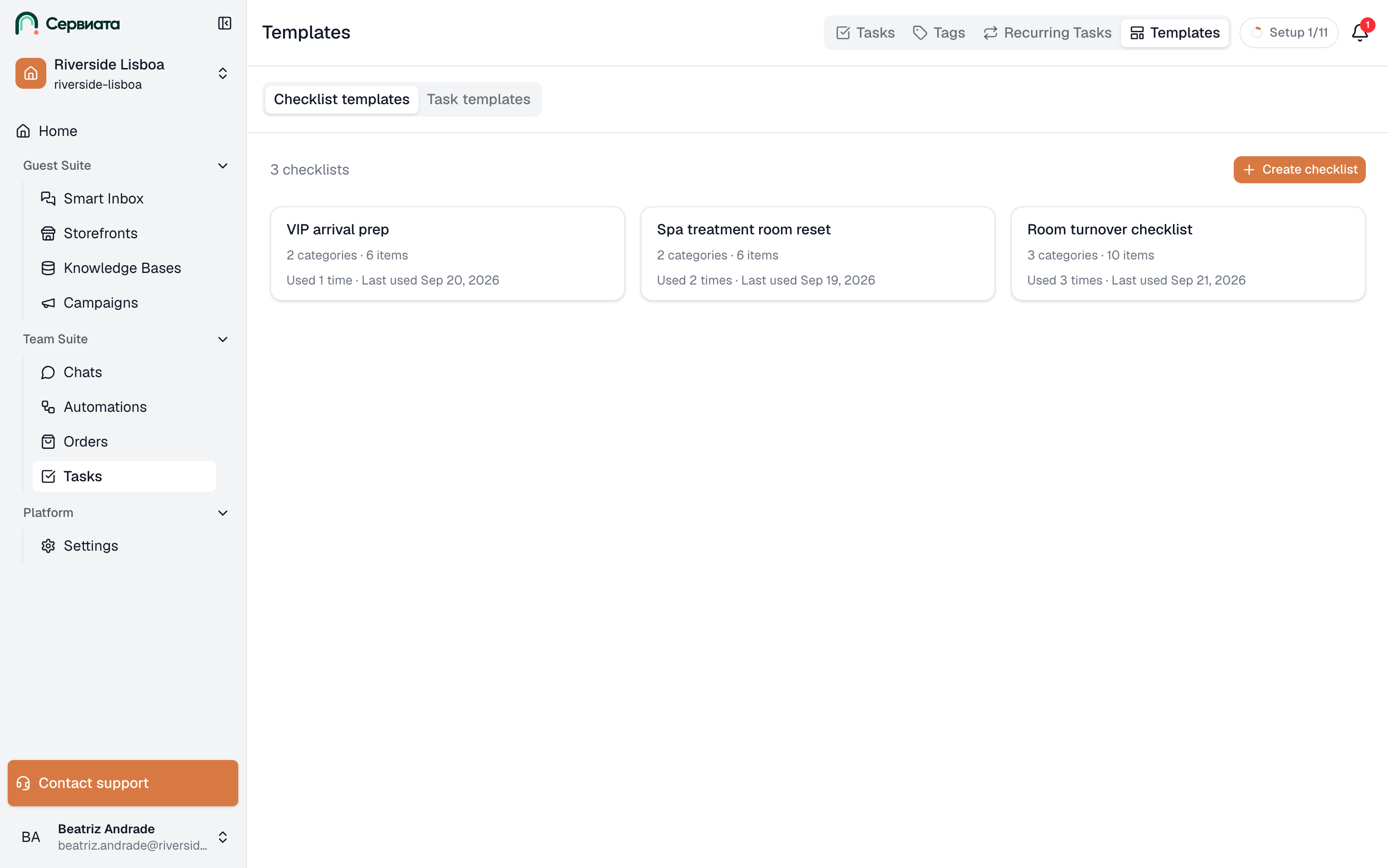
Templates live on the Tasks page, under the Templates tab on its Checklist templates sub-tab. They belong to the workspace, so every property can use the same ones. The other sub-tab holds task templates, which are whole tasks rather than lists.
- 1
- 2
- Checklist templates and Task templates — the two halves of the Templates tab
- One card per template, with how big it is and how often it gets used
Each card shows what the template contains — 3 categories · 14 items — and how much use it gets: Used 12 times, with the date it was last used, or Never used for one nobody has applied yet. That second line is worth reading occasionally: a template nobody uses is either wrong or forgotten.
Building one
- 1
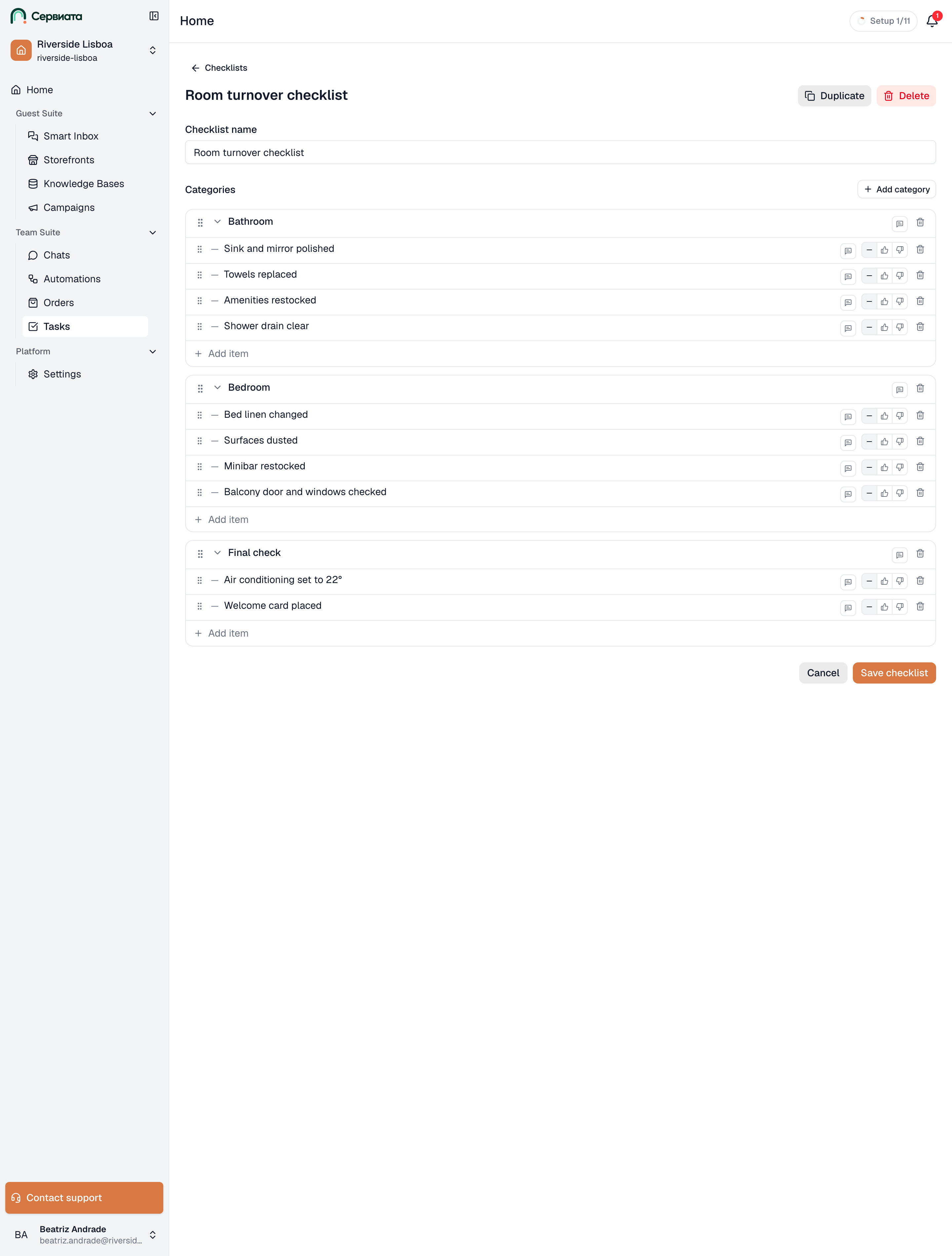
- The name, the categories, and the items inside them
Create checklist opens the editor, and a template is two levels deep:
- Checklist name — what this list is, e.g. "Room turnover checklist".
- Categories — the sections of the work:
Bathroom,Bedroom,Minibar. Add them with Add category. - Items — the actual checks inside a category, added with Add item.
Every item has a Default state, and this is the setting worth thinking about:
| Default state | The item starts as |
|---|---|
| No default | Unmarked — somebody has to decide. |
| Default: done | Already ticked. |
| Default: not done | Already marked as not done. |
Default: done turns a check into a formality
An item that starts ticked is one nobody has to look at. That's fine for a step which is genuinely automatic, and quietly corrosive everywhere else — the list still comes back complete when the work wasn't done. For anything you actually want confirmed, leave it at No default.
Save checklist stores it. A template needs a name and at least one item with a name before it can be saved.
Changing a template later
Open it from the list and edit it the same way. Two buttons sit at the top:
- Duplicate — copies the whole template and opens the copy, which is how you make a variant ("Room turnover — suites") without endangering the original.
- Delete — removes the template, after a confirmation naming it.
Editing a template changes what future tasks get. Checklists already sitting on tasks are not rewritten — the room that was cleaned yesterday keeps the list that was actually used, which is what makes a completed checklist evidence rather than a guess.
Duplicate before you reshape
If a template is in daily use and you want to try a different structure, duplicate it and change the copy. The original keeps producing consistent results while you work out whether the new version is better.
Who can do what
Anyone with access to tasks can see the templates and apply one to a task. Creating, editing, duplicating and deleting them needs the Manages checklist templates permission. Somebody without access at all is told so plainly: "You don't have access to checklists."
Next
- Checklists on a task — what the person doing the work actually sees.